Architecture and design
I studied architecture at Yale, on the design track, with an emphasis on computer-aided and graphic design. It taught me to see systems whole, and to care how information reaches the person who has to act on it.
 San Francisco
I am a primary care internist with a PhD in biomedical informatics. I care for a small number of people over a long time, and I limit the practice to ten patients so that each person’s care can be held, examined, and revised by one physician.
I studied architecture before medicine. I still begin the same way: understand the whole structure, then attend to the detail.
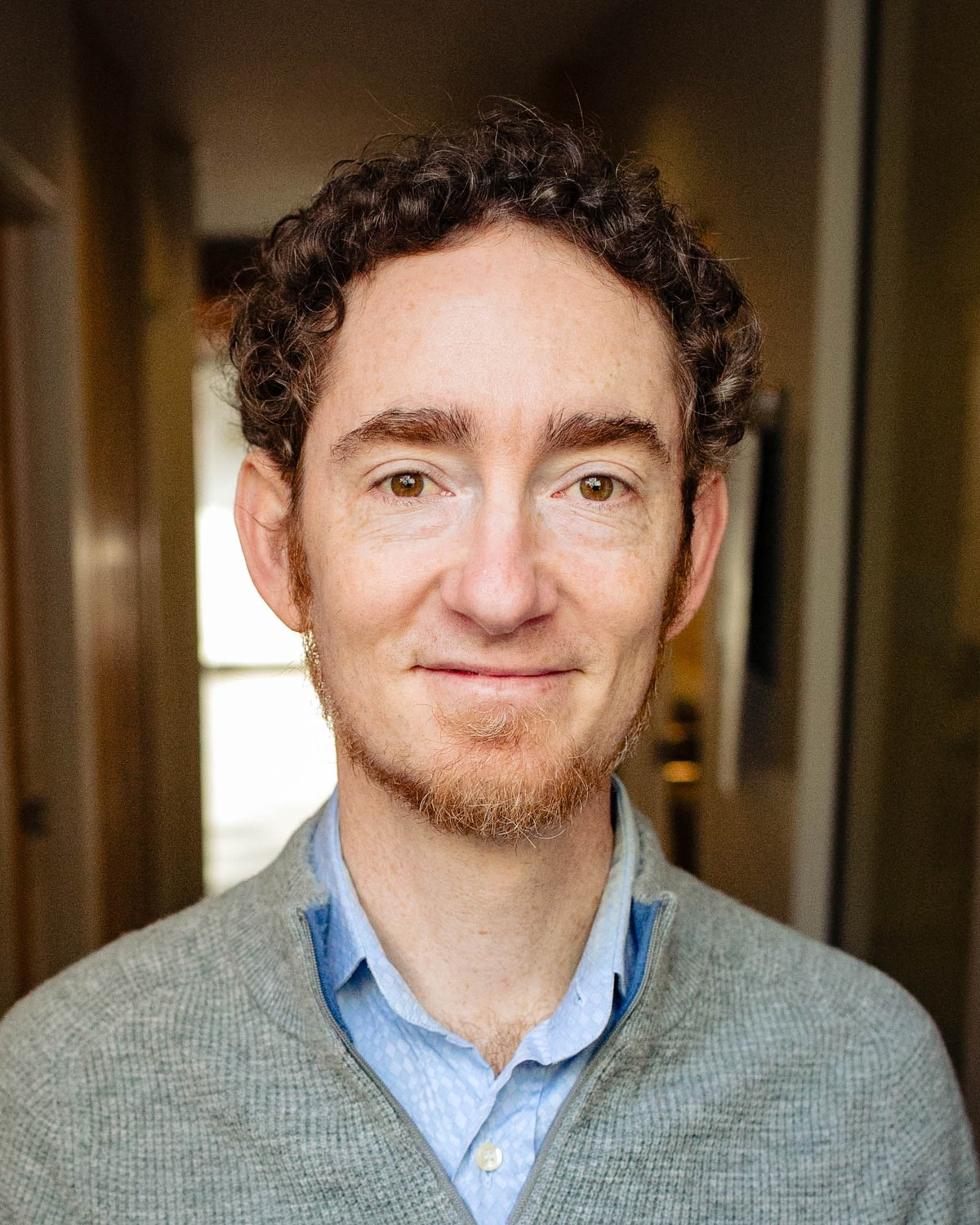
Each turn added something I still use.
I studied architecture at Yale, on the design track, with an emphasis on computer-aided and graphic design. It taught me to see systems whole, and to care how information reaches the person who has to act on it.
I have been flying since 1996, in gliders, airplanes, and helicopters, and became a helicopter flight instructor in 2004. Aviation is a discipline of checklists, situational awareness, and calm decisions with incomplete information. Medicine asks for the same.
Before medical school I worked in a nutrition and metabolism laboratory at Children’s Hospital Oakland, on a study comparing the effects of Western and plant-based diets on the gut microbiome in mice. My role was data analysis and visualization, and it was my first experience of turning raw measurements into something a clinician could act on.
At the University of Washington I completed an MD and a PhD in biomedical and health informatics, supported by an NIH translational science fellowship. My dissertation built a mobile tool that let patients photograph and report on surgical wounds after leaving the hospital, with machine-learning models that predicted infection from those daily assessments.
I also led the development of an electronic surveillance tool that reads the medical record, including free-text notes, to identify catheter-associated urinary tract infections in real time. The hospital’s infection-control team adopted it for routine use.
I completed residency in primary care internal medicine at the University of California, San Francisco, in the Health Systems Leadership pathway: quality improvement, root-cause analysis of medical error, and health-policy work. I was usually the one analyzing and visualizing the data.
I chose community practice over an academic career, closer to patients and to my own family. After several years as a primary care physician at Palo Alto Medical Foundation, I began a small, longitudinal practice in San Francisco. N of 1 Medicine is its most concentrated form.
For years after residency I practiced strictly by guidelines. They remain essential: they are the best summary we have of what works on average. But no one I care for is an average, and short trials say little about decisions that play out over decades. Waiting for certainty carries its own risks.
N of 1 is the name for how I practice now. I begin with the strongest population evidence, add what is known about mechanism and the newer evidence that has not yet reached the guidelines, and then treat each plan as a careful experiment in one person: explicit, measured, and revised when the response says it should be.
I take the time to understand what matters to you before deciding what to test or treat. I read new research continually and revise my own approach when the evidence warrants it.
I often describe it this way: your body is your ship, and you are the captain. I serve as your first mate, bringing expertise, perspective, and navigation, while you determine the course.
I am particularly experienced with complex, high-acuity, and rapidly evolving health challenges: situations that call for intensive physician involvement, specialist coordination, close follow-through, and repeated revision of the plan.
I use AI every day for research, programming, and clinical decision support. Its output is working material until I have reviewed it, and I remain accountable for every conclusion. I also oversee information security for the practice.
Electronic surveillance for catheter-associated urinary tract infection using natural language processing.
AMIA Annual Symposium Proceedings, 2017Diagnosing surgical site infection using wound photography: a scenario-based study.
Journal of the American College of Surgeons, 2017A prognostic model of surgical site infection using daily clinical wound assessment.
Journal of the American College of Surgeons, 2016Design considerations for post-acute care mHealth: patient perspectives.
AMIA Annual Symposium Proceedings, 2014Sanger PC is first author on each. Earlier work includes national presentations at AMIA, the Surgical Infection Society, and IDWeek, and UCSF Grand Rounds on the past, present, and future of electronic medical records (2020).
I live in San Francisco with my wife, a naturopathic doctor and nurse practitioner whose training has widened my sense of what helps people heal, and our two daughters.
San Francisco Bay AreaVirtual care possible for patients in California and New York
Inquire